


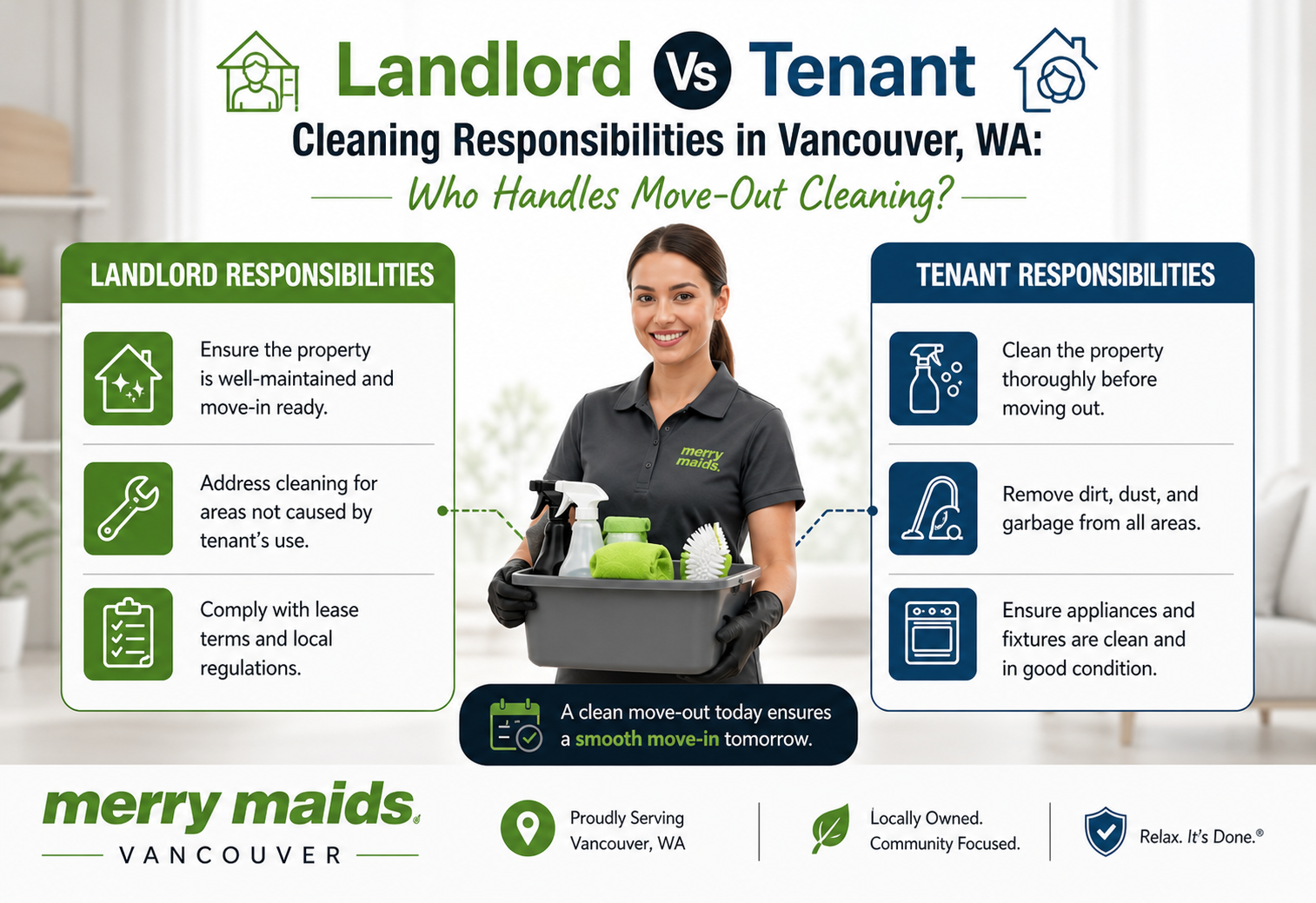
Whether you are a landlord or a tenant in Vancouver, WA, you need to understand cleaning responsibilities during a rental transition. A proper idea can help you to prevent disputes, delays and unnecessary expenses. In Vancouver, landlords and tenants often wonder who will be responsible for the cleaning operations when the latter have to move out. Many tenants look for move out cleaning services Vancouver WA to satisfy the expectations of landlords who try to protect their property by relying on lease terms and state laws.
Landlord Vs Tenant Cleaning Responsibilities in Vancouver, WA: Who Handles What?
Take a look at who ultimately handles move-out cleaning and how cleaning duties are typically divided between landlords and tenants:
Routine cleaning during tenancy
Generally, while occupying the property, tenants have to be responsible for day-to-day cleanliness. They are supposed to take care of basic upkeep – such as:
- Sweeping,
- Dusting,
- Mopping,
- Bathroom cleaning, and
- Keeping kitchens sanitized
Landlords are not expected to take care of routine cleaning for occupied units.
Normal Wear and Tear vs. Damage
Landlords have to handle normal wear and tear responsibilities, such as minor carpet wear or faded paint. In case of excessive dirt, grease buildup or stains resulting from neglect, it is the responsibility of tenants to clean it all up.
Lease agreement terms
Often, cleaning expectations are mentioned in the lease agreement. In some agreements, it is specifically written that tenants have to return the property in a “professionally cleaned” condition. Others just state that the returned property must be “clean and habitable.”
Appliances and fixtures
Typically, tenants are supposed to clean up all the appliances that they use in the rental unit. These include:
- Ovens,
- Refrigerators / freezers, and
- Dishwashers
Cleaning costs may be deducted from the security deposit if tenants leave appliances dirty beyond reasonable use.
Bathrooms and kitchens
Tenants have to clean up all areas of bathrooms and kitchens thoroughly – including sinks, toilets, tiles and countertops. If landlords find heavy soap scum or grease, they can make deductions for additional cleaning charges.
Carpets and flooring
Carpet cleaning is a common gray area. Light wear is acceptable. However, in case of excessive stains, odors or pet hair, landlords may demand professional carpet cleaning.
Common areas vs. Private spaces
For common areas in multi-unit properties, such as hallways or stairwells, landlords usually handle the cleaning requirements. Tenants are responsible only for their private living spaces.
Landlord or Tenant – Who Handles Move-Out Cleaning in Vancouver, WA?
Tenants are usually responsible for move-out cleaning in most cases. They are supposed to return the rental unit to the same condition as during the start of the lease term, minus normal wear and tear.
If a tenant leaves the unit dirty, landlords have the legal right to deduct reasonable cleaning costs from the security deposit. However, they cannot charge tenants for cleaning that addresses pre-existing issues or normal aging of the property.
Tenants should use photos or videos to document the condition of the unit at move-in and move-out times. Landlords should also provide them with clear checklists, outlining their cleaning expectations. Understanding responsibilities can help both sides to avoid disputes.
Whether you are a tenant or a landlord, you must have got a fair idea about the cleaning responsibilities that both parties are supposed to undertake. If you are short on time and want to avoid hassles, go for professional cleaning services to make the transition process fair and hassle-free – for everyone involved.
